Is it too warm?
Should I go airier?
Where does this sit on the scale of timeless and modern?
Is it communicating what I want it to?
Would people hire me for this type of work?
What if it’s bad?
Do I even belong in these photographer circles?
Have I lost my mind?
These were the questions swirling around my brain after editing the digital images from Kayla Mari Photography’s Film + Family Content Day and Workshop.
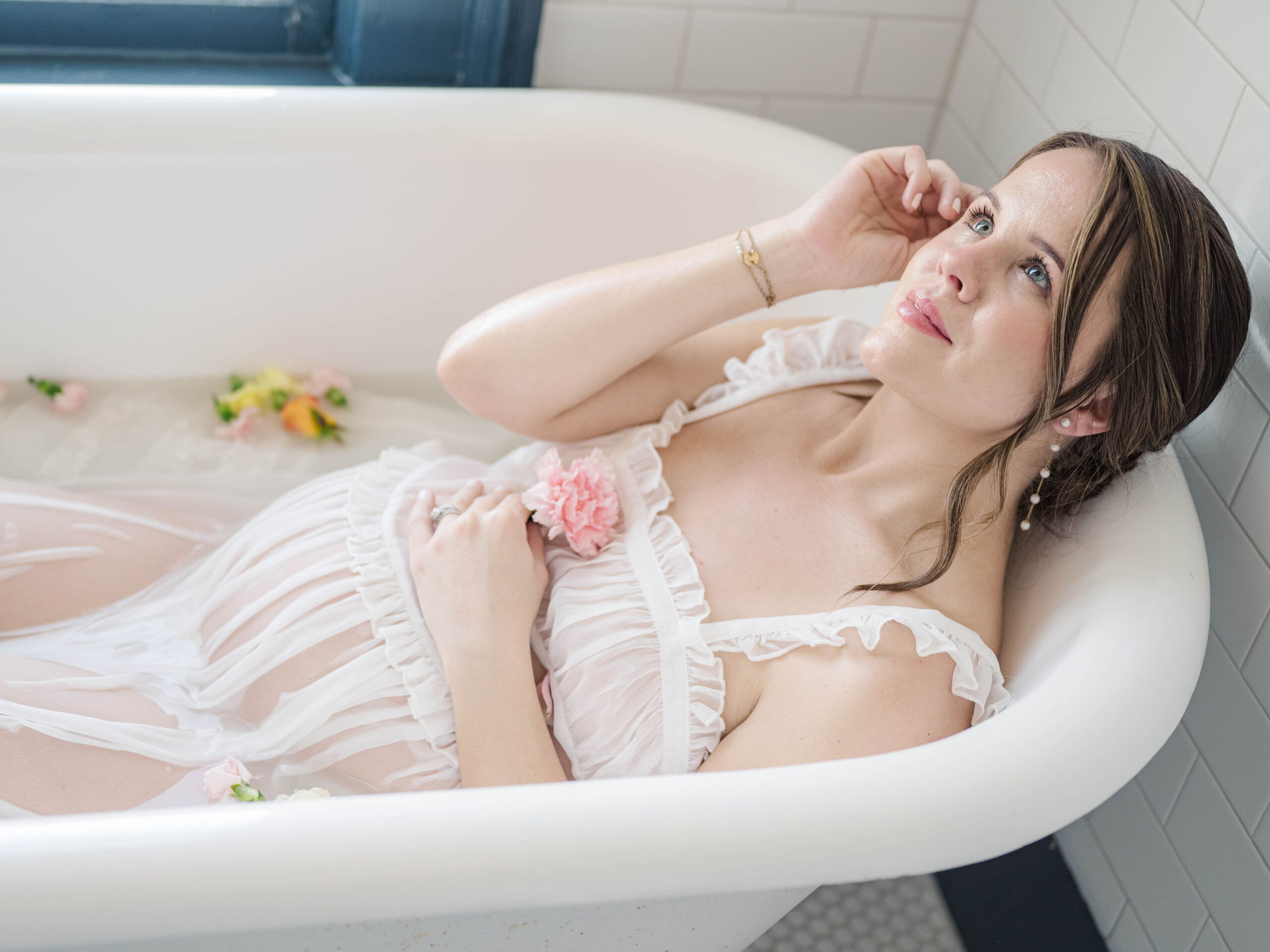
I adored the images I captured that day, especially the maternity portraits at the historic Bingham Estate. The entire space felt like something pulled straight from an heirloom painting: soft floral patterns, worn textures, pale colors, and the most beautiful window light pouring through the rooms. Our model was stunning and made the process feel effortless.
When I got home, I dove straight into Lightroom. I edited with excitement and curiosity, leaning into the feeling of the space and the images I remembered capturing. When I finished, I had a set of photographs I was genuinely proud of. The kind you immediately send to friends. The kind you show your mom because that little “put it on the fridge” feeling never really goes away.
Then I opened Instagram.
Other photographers from the workshop had started sharing their edits.
And WOW… they were absolutely beautiful.
But they were also… different.
Brighter.
Whiter.
Airier.
More polished.
More what I imagine many clients might expect to see.
And suddenly all those questions started creeping in.
So I did what any slightly obsessive artist might do. I pulled a sample photo from several of the photographers who attended the workshop (images with nearly identical poses and lighting situations) and dropped them into a grid next to mine.
Then I zoomed in.
I analyzed.
I compared.
I micro-studied every detail.
And somewhere along the way, I temporarily lost the joy I originally felt about my edits.
Luckily, I’ve been an artist long enough to recognize that spiral when it starts. I talked to my mom about feeling like an outlier. I texted a trusted friend with a great technical eye. I said the anxious thoughts out loud. I gave them space. And then I reframed.
Because that’s what anxious artists do.
We second guess ourselves.
And then we ground ourselves in the creative foundations we know to be true.
Once I took a breath, the answer actually felt pretty obvious.
I know exactly why I edited the images the way I did.
It speaks to who I am as an artist.
And honestly, it makes sense that my images would look a little different from photographers who have built their style entirely within the world of photography. My brain simply doesn’t work that way.
I cannot separate my artistic influences.
Painting, drawing, photography… my brain processes them all through the same lens. And I’ve come to believe that this cross-pollination is actually one of my biggest strengths.
When I look at an image, my eye is constantly bouncing between value and color. Light and dark first; the contrast, the key. Then the relationships between warm and cool hues. I see colors the way I would build them in a painting, almost like translucent layers stacked on top of one another.
If I were painting this scene in oil for that heirloom vibe, I would begin with an underpainting in transparent red oxide. From there, I would slowly build layers upward: shadows first, then midtones, and finally highlights. Each layer would become progressively thinner and more transparent, allowing the warmth underneath to glow through the final image. I’d play with the push and pull of warm colors next to cools and explore creating a unified color palette. The result is depth, luminosity, and color that feels alive and lived-in.
That same instinct shows up in my editing.
Everything begins with warmth and natural light.
The layers interact.
The final image sits as though there were an underpainting as its foundation.
So, yes, my edits might land a little heavier than a true airy style.
And maybe a little warmer than what’s currently trending.
But they also feel like me.
And that matters.
My background as a painter heavily influences the way I approach photography, and it’s a connection I talk more about on my About page as an artist and photographer.
As I continue building my photography business, I’m trying to lean more intentionally into authenticity.
Workshops like the one hosted by Kayla Mari Photography are invaluable. Learning from photographers who are further along in their journey is one of the best ways to grow. Their knowledge, experience, and generosity are incredible gifts to newer photographers like me.
But learning from someone doesn’t mean becoming them.
It doesn’t mean copying their style or editing choices. It means absorbing what resonates, studying what works, and then filtering it through your own creative voice.
This mindset isn’t actually new for me. It’s the same process that has guided me as a painter for years.
Artists study other artists.
We borrow ideas.
We learn techniques.
And then we make them our own.
So when imposter syndrome shows up (and it absolutely does!!) I try to remind myself that I have the tools to talk back to it.
I can stay grounded in the artistic values that guide my work while also acknowledging that I still have plenty to learn.
Because both things can be true.
I am proud of the images I created.
And I am still learning.
I’m a big fan of the both/and theory when it comes to creative growth.
I can admire the brighter, airier edits from photographers I respect and still embrace the painterly warmth that feels natural to me.
I can recognize areas where my technical skills need improvement and celebrate the artistic instincts that shape my work.
I can feel like a beginner in some spaces and still belong in the room.
Growth as an artist rarely happens in clean, confident lines. It’s messy. It’s full of questions and experiments and occasional spirals of doubt.
But sometimes those moments of uncertainty are also the moments where your voice becomes a little clearer.
And if my voice as a photographer continues to look a little like a painting… I think I’m okay with that.
If you’re curious how that painterly influence shows up in my work, you can explore more images in my family photography portfolio.
0 Comments